



SAN DIEGO COUNTY – After the passage of sweeping healthcare cuts in H.R. 1, also known as the One Big Beautiful Bill Act, local healthcare institutions are bracing for impact.
Coupled with the ongoing government shutdown, organizations like Palomar Health, Sharp HealthCare and Neighborhood Healthcare are attempting to adapt while navigating legislative uncertainties.
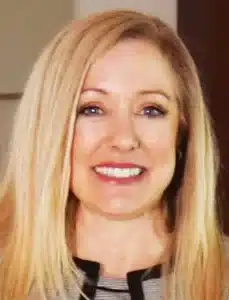
CEO
Palomar Health
“San Diego is home to a diverse and growing population, including seniors, military families, and underserved communities,” Palomar Health CEO Diane Hansen said. “Sustaining strong reimbursement helps hospitals like Palomar Health keep specialized care close to home, maintain timely access to emergency service,s and invest in innovations that support the region’s long-term health needs.”
According to the County of San Diego, cuts outlined in H.R. 1 put about 400,000 San Diegans at risk of losing healthcare coverage. The bill is estimated to cost the county over $300 million annually in additional costs or lost revenue.
“Everything has really been up in the air since H.R. 1,” Neighborhood Healthcare Director of External Affairs Corrine Busta said. “There’s been a lot of litigation, whether it’s through the Attorney General’s Office joining other states and pushing back on the federal government [or through other entities] … At this time, we’ve been fortunate enough to keep things business as usual.”
However, Busta said that federally qualified healthcare centers (FQHCs) like Neighborhood Healthcare are aware that the legislative changes will spell major disruption in the near future.
Impact of Federal Cuts on Local Healthcare
Nationally, H.R. 1 will cut federal Medicaid spending by $911 billion over 10 years and increase the number of uninsured people by 10 million in 2034.
Hansen said that the impact on hospital reimbursements is top of mind.
“At Palomar Health, we serve a large Medicare and Medi-Cal population, so those dollars are vital to sustaining many of the programs and specialized services our community depends on,” Hansen said. “Reductions in federal funding could significantly impact hospital reimbursements, which in turn may affect access to care and available health resources.”
For Sharp, Executive Vice President and System Chief Financial Officer, Susan Green said that the “most significant impact” is related to new limits on provider taxes and state-directed payments, reducing federal matching opportunities for Medicaid reimbursement. Uncertainty around California’s hospital provider fee, the Hospital Quality Assurance Fee, also presents funding insecurity to Sharp.
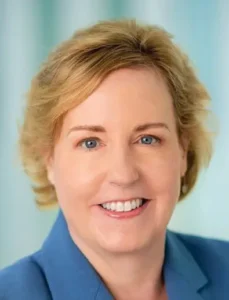
EVP & System CFO
Sharp
“Medicaid reimbursement does not cover the cost to provide care currently,” Green said. “Changes to the Hospital Quality Assurance Fee that reduce reimbursements to Sharp will further exacerbate the gap between the cost to provide care and the reimbursement we receive and will require Sharp to make difficult decisions.”
The reduction of federal funding presents an additional strain on local hospitals, which are already navigating rising costs for staffing, technology and patient care. Busta said that healthcare leaders are in a tough position of deciding how to make up the difference.
“For all the regions we serve, we run a pretty tight ship employment-wise, so making cuts is not the first thing on our leadership’s mind right now,” Busta said. “It’s looking at growth opportunities that we’re going to have to pull back from and, maybe down the road, it has to be services.”
FQHCs are caught in the crosshair of federal cuts, Busta said. She expressed that FQHCs offer much-needed support to hospitals throughout the region, helping to prevent overcrowding and provide accessible care.

Director of External Affairs Neighborhood Healthcare
“That’s one of the scary things that can happen with healthcare centers — if this government shutdown continues, we no longer have funding to help us serve the communities that we’re in,” Busta said. “A lot of healthcare centers are going to have to shut down… And the hospitals in San Diego County are going to be overrun. Individuals like you and I, might be put in a position of not getting the healthcare that we rely on, or the quality of healthcare we rely on.”
While Busta said that, due to its size, Neighborhood Healthcare is not at immediate risk of closing, she predicts that “hundreds [of FQHCs] throughout the state will shut down in a year.”
Local healthcare leaders agreed that cuts will contribute to a substantial surge of people seeking care in emergency rooms.
“Research shows that those without health care coverage often forgo primary or routine care and seek acute care at hospital emergency departments,” Green said. “This will create additional pressure on all emergency departments across San Diego County, both operationally and financially. Additional co-pays, eligibility requirements and presumptive eligibility changes will result in more uncompensated care and bad debt for Sharp. But more importantly, people will not seek routine care without coverage.”
How Healthcare Leaders Plan to Adapt
With far-reaching impacts looming, local healthcare leaders are prioritizing problem-solving and adaptation.
“While these potential cuts pose real challenges, we remain focused on careful operational efficiency and innovation to help safeguard patient care and maintain essential services in our community,” Hansen said.
Palomar Health is fortifying its services by streamlining its Emergency Department, now treating nearly 88% of ambulance arrivals in under 30 minutes. Hansen said the hospital is also expanding its behavioral health services to maximize efficiency and human connection.
“Palomar Health has recently invested in enhanced emergency services and new process improvements to help patients be seen faster and receive the right level of care,” Hansen said. “While we’re continually optimizing ER operations, significant funding reductions could challenge these advancements and increase demand on emergency departments across the region.”
Busta said that, before the government shutdown, healthcare leaders like herself flew out to Washington, D.C., with the National Association of Healthcare Advocacy to speak to government representatives about H.R. 1’s impacts.
“There were healthcare centers from across the country, and by having that type of coalition and group together, we discussed ideas of whether we could run away from the situation, or stand firm, lean in and maybe figure out a different way of how we’re going to continue to do the good work that we do,” Busta said.
While many variables still remain unknown, Busta said that San Diegans should not be afraid to ask questions and develop a plan of action.
“Have an open and honest dialogue with your healthcare provider to see what is going on, to see what their plan is,” Busta said. “Because healthcare providers are the people that you do trust. We always tell people to come in and talk to us, and they do because… Neighborhood Healthcare, over the years, has done a great job connecting with the community… We’re always engaging, always having conversations.”
Read the full article here